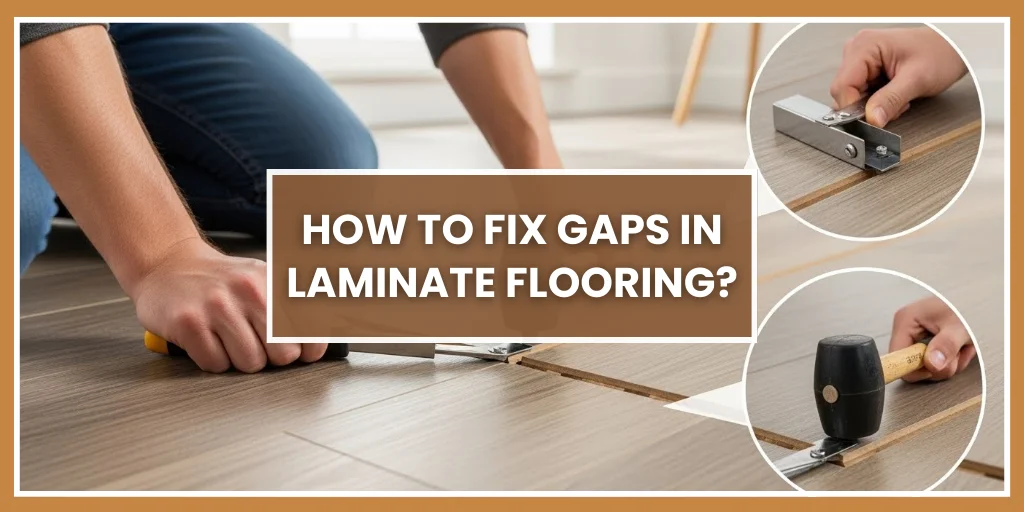
Laminate flooring is certainly among the leading choices of homeowners for modern home floors. This is because laminate floors are highly durable, have water resistance, and look stylish. The one issue that almost every homeowner faces with these laminate solutions is that gaps start to form between the laminate planks. These gaps are what affect the look of the flooring and negatively impact its longevity if you leave it untreated for a long time. If you have been looking for the answer to the question of how to fix gaps in laminate flooring, here is a guide by Floor Mart for you.
Why Do Gaps Appear in Laminate Flooring?
First things first, know how these gaps appear in your laminate floors. The reasons for their occurrence are the changes in temperature, poor fitting technique, and humidity. Laminate planks are made to allow an easy floating installation over your subfloors. This is because they expand and then contract after fitting due to environmental shifts. When you do the installation correctly, the movements are absorbed by the expansion gaps placed along the walls. But if there is a misalignment, these planks will start to pull apart from each other, resulting in those fine lines that look unappealing to the eye. Some of the most common causes of gaps in laminate flooring include:
- There is a lack of proper expansion space as each plank requires a minor gap of about 1/4th of an inch around the room’s perimeter. Without this, the laminate boards will push against the walls and start to buckle.
- There are major humidity shifts indoors, which result in the laminate boards to expand and contract when it’s dry. This unusual expansion and contraction will cause the gaps to appear.
- If the subfloors are not even, the planks will shift or bend with time, which causes the boards to separate.
- Poor installation is another culprit for these gaps – the floors were not snapped together tightly, or the click-lock system wasn’t engaged properly.
- You are moving or dragging heavy furniture over the floors, which causes the planks to dislodge and gaps to occur.
Step-by-Step Guide: How to Fix Gaps in Laminate Flooring
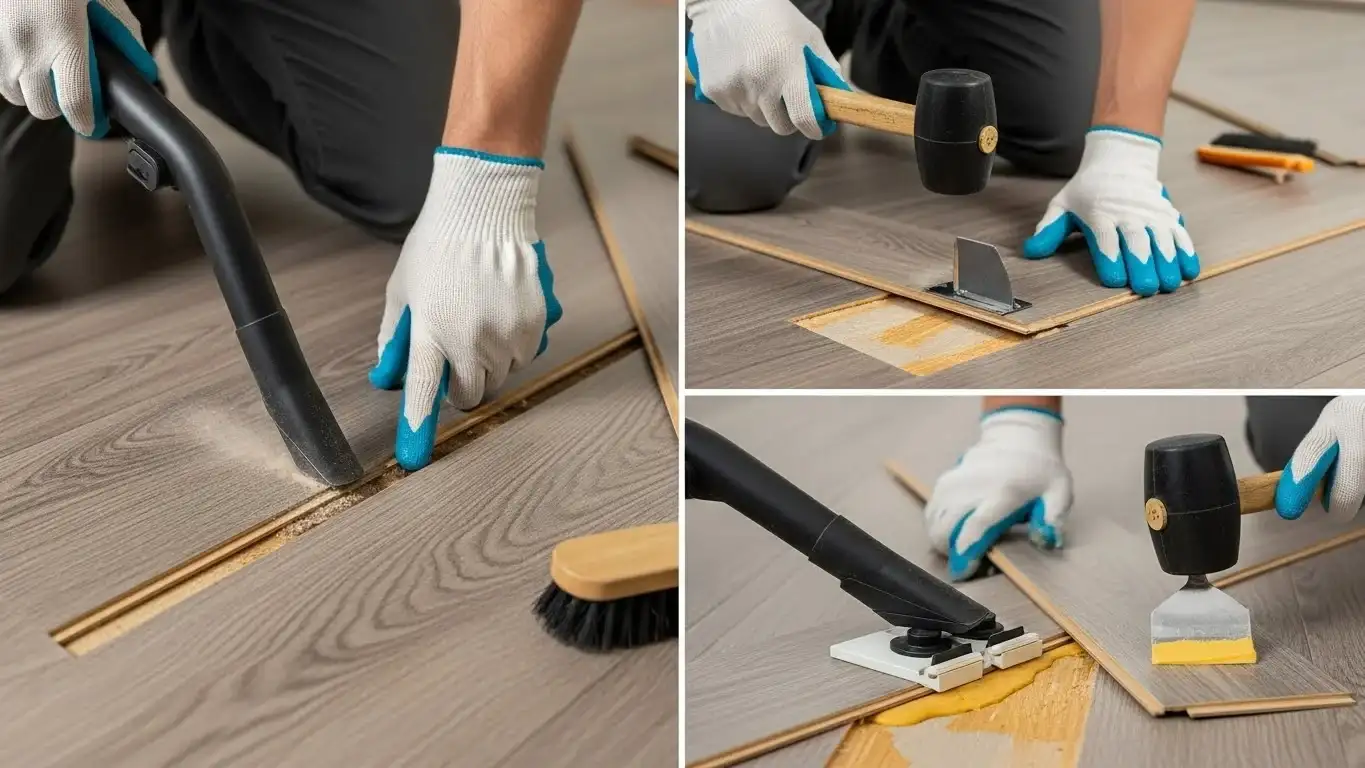
Fixing the gaps in your laminate floors is quite easy, but it’s a patient task. You must follow the right steps when dealing with loose planks or separating joints. Here is a step-by-step guide from Floor Mart to help fix these gap issues.
Step 1: Identify the Problem Area
You must first walk across the entire floor and locate where these gaps have formed. Mark the area with a painter’s tape to find them when you are about to fix them. Measure how wide these gaps are to apply a simple push-back method or use the laminate floor gap filler.
Step 2: Clean the Gaps Thoroughly
Before you do any kind of repair work, you must take measures to ensure the floors are clean. Use a vacuum cleaner to remove all the dirt and debris trapped between the planks. Often, this dirt and debris prevent the laminate planks from closing tightly.
Step 3: Try the “Pull Bar” or “Tapping Block” Method
If your flooring Dubai is laid down with a click-lock system, we recommend gently pulling the boards back together. For this, use a pull bar, a metal tool that has a curved end. Place the curved end of the pull bar against the edge of the loose planks and use the hammer to tap in the opposite direction. This will result in the plank going back into the right position. This method is perfect to fix small gaps caused by the natural contraction or expansion. Remember not to use too much force, or the entire locking system will be damaged.
Step 4: Use a Floor Gap Fixer Tool
A floor gap filler, also called a gap puller, is a specialized material with a sticky pad. It will grip the plank surface without leaving any marks on it. Just stick the pad onto your loose laminate board. Now tap the attached handle on this pad with a mallet to slide that loose board back into place. This is perhaps the safest and easiest way to fix those gaps in laminate flooring surfaces without disassembling the large sections of it.
Step 5: Fill the Gaps
If you can’t pull down on the planks, this might be because the locking edges of these boards are damaged. You can fix them with a laminate floor gap filler. Just choose a filler that matches the floor color and apply it evenly into the gaps with a putty knife. Just smooth out that surface with a clean cloth to remove any excess puller material before it dries off completely. A high-quality filler is flexible and will expand or contract with your flooring.
Step 6: Reinstall or Replace Severely Damaged Planks
If the locking system for the floors is broken or the boards are warped, you need to replace them. Just remove the affected planks by uncloaking the rows until you reach that damaged section. Remove that damaged plank with a new one carefully and ensure that the edges are snapped tightly together.
Preventing Future Gaps
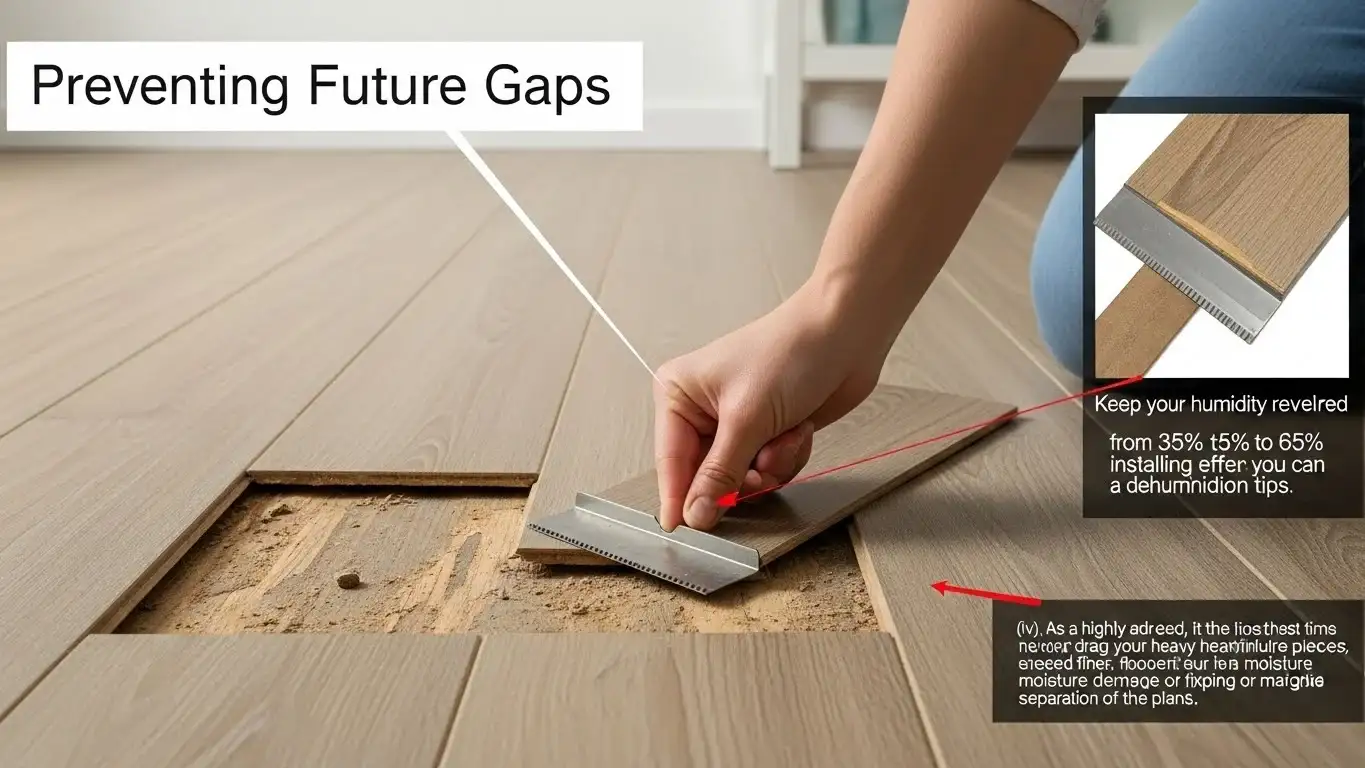
Once the floors are repaired, it is important that you maintain the right condition to prevent any future gaps. For this, you can make use of the following prevention tips.
(i). Keep your indoor humidity levels from 35% to 65% with a humidifier or a dehumidifier.
(ii). It’s best to leave a proper space for the expansion effect around the edges when you are installing laminate floors.
(iii). You are highly advised to use a moisture-resistant underlayment to result in stable flooring and prevent any expansion or contraction.
(iv). As a homeowner, you should never drag your heavy furniture pieces over the floors; instead, lift them to prevent any dislodging.
(v). When you are installing the laminate planks for the first time or fixing the gaps, check for the signs of moisture leakage. Often, this moisture damage is the cause of the warping and separation of the planks.
What If the Expansion Gap Is Too Big?
In some cases, where the gaps are too big, you can cover that extra space with two methods. One is the quarter-round molding, and the other is the use of baseboard trim. These extra gaps are usually when an installer leaves more than necessary space, and the boards shrink due to dry air.
Floor Mart Is The Best Service Provider To Fix Laminate Flooring Gaps
The right kind of installation service provider will take care of these issues before they occur. Floor Mart is one such service provider for laminate floor installation. We have professional floor fitters that will lay down proper moisture underlayment and leave proper expansion space during the installation. In case you have gaps in your laminate floor planks, call us and we will do a proper fixing method as per the extent of the damage.
Final Thoughts
How to fix gaps in laminate flooring is not always about getting costly repair jobs; you just need a proper guide and some patience. These floors can be fixed easily with the right tools and techniques. At Floor Mart, you get not only the best laminate flooring planks but also our installation and repair services.
FAQs on Fixing Gaps in Laminate Flooring
1. Why is my laminate floor separating?
The reason for these floor planks separating is mainly due to temperature and humidity changes. When the air dries, the planks will slightly contract to cause visible gaps.
2. How to fix gaps in laminate flooring?
You can use the pull bar or the floor gap fixer to slip the loose planks back together. For the persistent gaps, you must apply a color-matched gap filler to seal the loose space.
3. What causes laminate flooring to separate?
One of the most common issues includes the humidity changes, poor fitting, uneven subfloors, and heavy furniture. This floating design of the laminate planks means there is much space to expand and contract without the boards shifting apart.
4. How to keep laminate floors from separating?
The best way to prevent the laminate boards from separating is to maintain a consistent humidity level indoors. You can also lay down underlayment for moisture resistance, which can cause the gaps to occur.