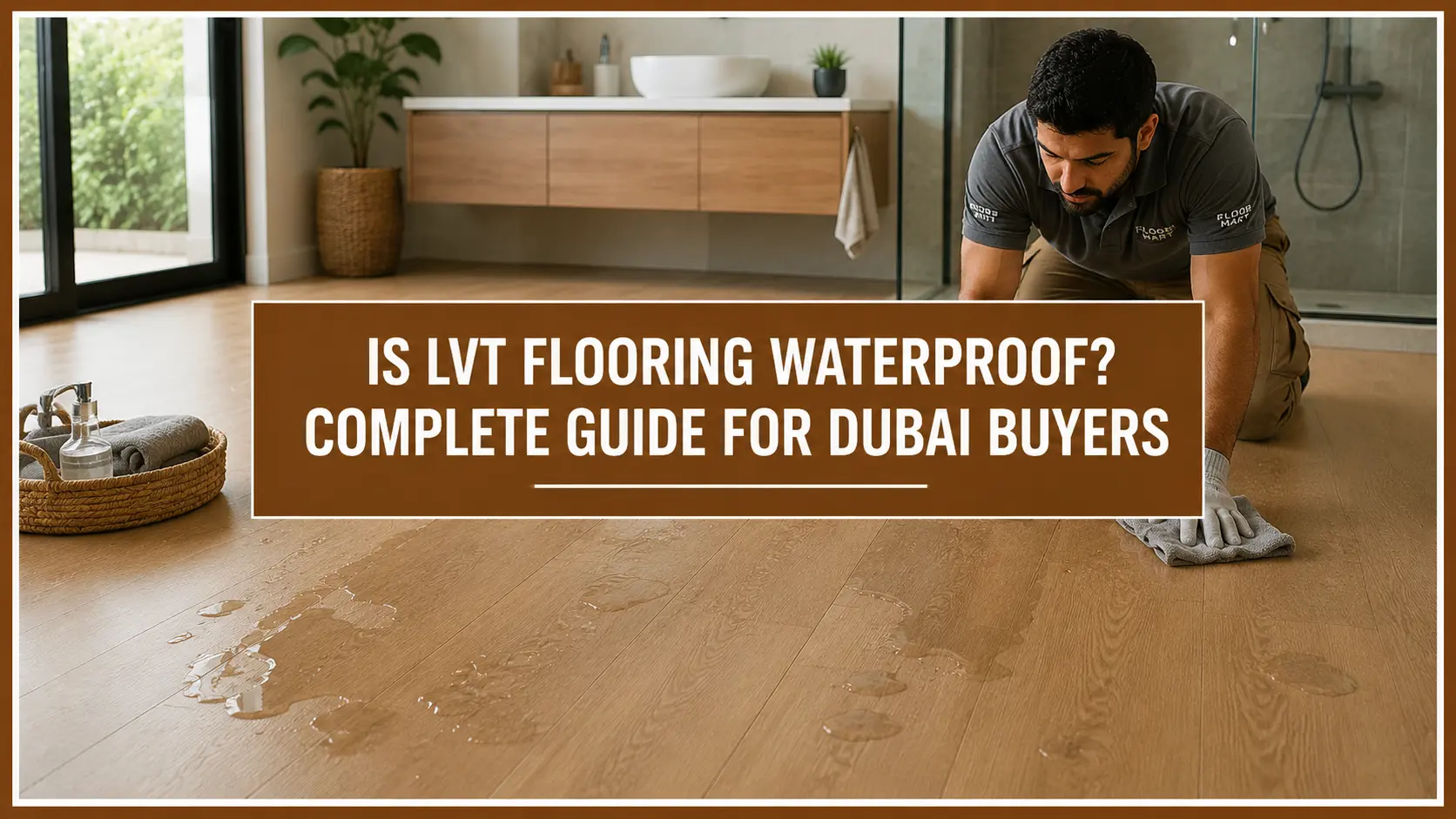
If you’re renovating a villa, apartment, or office in Dubai, chances are someone has already told you to check out our LVT flooring range because it’s waterproof. But is that actually true, or is it one of those flooring myths that gets repeated so often it starts to sound like fact?
Here’s the short answer: most LVT flooring sold today is genuinely waterproof at the plank level, which makes it one of the best flooring choices for Dubai’s climate. But “waterproof” doesn’t automatically mean “flood-proof” or “install it any way you like.” There’s more nuance to it and if you’re spending money on new floors, you deserve the full picture before you buy.
This guide breaks down exactly what waterproof means for LVT, why it matters so much in a city like Dubai, and what to check before you choose a supplier.
What Is LVT Flooring, Exactly?
LVT stands for Luxury Vinyl Tile. It’s a multi-layer synthetic flooring product designed to replicate the look of natural wood or stone, without the drawbacks that come with those natural materials. A typical LVT plank is built from:
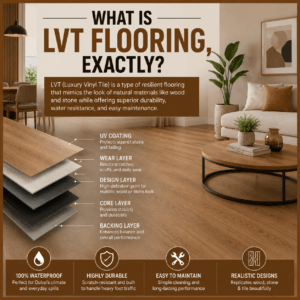
A base or core layer (often rigid WPC or SPC core in modern products)
- A printed design layer that creates the wood or stone visual
- A clear wear layer that protects against scratches and stains
- Sometimes a UV-coating on top for extra durability and colour retention
Because every layer is synthetic, there’s no organic wood fibre inside to absorb water — and that’s the whole reason LVT holds up so well in wet or humid conditions.
So, Is LVT Actually Waterproof?
Yes — with one important distinction buyers should understand: waterproof vs water-resistant.
- Water-resistant flooring can handle occasional spills or light moisture if cleaned up quickly, but prolonged exposure can still cause damage.
- Waterproof flooring, which most modern LVT (especially rigid-core WPC and SPC types) qualifies as, will not swell, warp, or disintegrate even after direct contact with water.
Because the plank itself is 100% synthetic, spilled water, humidity, or the odd flooded bathroom won’t cause the plank to distort the way it would with laminate or engineered wood. That’s why LVT is now a go-to option for kitchens, bathrooms, laundry rooms, and even basements or semi-outdoor areas.
The catch: waterproof refers to the plank, not necessarily the floor system. Water can still find its way through seams, edges, or poorly sealed joints if installation isn’t done properly — more on that below.
Why Waterproofing Matters More in Dubai Than Almost Anywhere Else
Dubai’s climate creates flooring conditions that most manufacturers in colder countries never have to design for:
- High humidity for much of the year, especially in coastal and low-lying areas
- Extreme summer heat, often above 45°C, which causes many materials to expand, contract, or fade
- AC-driven temperature swings between the outdoors and indoors, which stresses flooring seams over time
- Open-plan kitchens and living areas, meaning spills in one zone can easily travel into another
- Villas with pools, gardens, and outdoor-adjacent spaces, where moisture exposure is a daily reality, not an occasional accident
Traditional hardwood and even some laminate products struggle in these conditions — they can swell, cup, or develop mold underneath if moisture gets trapped. LVT, on the other hand, is engineered to shrug off exactly this kind of environment, which is a big reason it has become one of the most popular flooring choices across Dubai homes, offices, hotels, and retail spaces.
Not All “Waterproof” LVT Is Built the Same
When you’re comparing options, the construction type matters as much as the waterproof label:
- SPC (Stone Plastic Composite) core The most rigid and dense option. Extremely stable in heat, highly resistant to moisture, and a strong choice for Dubai’s climate and underfloor heating setups.
- WPC (Wood Plastic Composite) core Slightly softer underfoot and quieter to walk on, still fully waterproof, but marginally less rigid than SPC in very high-heat conditions.
- Flexible/glue-down LVT Thinner and more flexible, often cheaper, but more dependent on correct adhesive application and subfloor prep to stay fully sealed at the joints.
For wet areas like bathrooms, kitchens, or villas near a pool, rigid-core SPC or WPC LVT with tight click-lock or fully sealed joints is generally the safer, longer-lasting choice.
Where Installation Makes or Breaks Waterproofing
This is the part most buyers don’t hear about until something goes wrong. The plank material can be 100% waterproof, but if installation is rushed or done by an inexperienced team, water can still seep in through:
- Loose or poorly locked seams
- Gaps at wall edges, skirting boards, or transitions between rooms
- Missing or low-quality sealant around wet zones like shower thresholds
- Incorrect underlayment that traps moisture rather than letting the floor breathe
This is why choosing an experienced local installer matters just as much as choosing a good product. A properly installed LVT floor in a Dubai kitchen or bathroom should handle daily spills, mopping, and humidity without any issues for years.
Best Rooms for Waterproof LVT in Dubai Homes
- Kitchens — resists spills, grease, and daily foot traffic
- Bathrooms & powder rooms — handles splashing and humidity far better than laminate
- Laundry rooms — built to cope with detergent spills and washing machine leaks
- Majlis and living areas — practical for homes that entertain often
- Villas with garden or pool access — resists moisture tracked in from outside
- Offices and retail spaces — easy to maintain under heavy foot traffic
Maintenance Tips to Keep Your LVT Floor Performing Well
- Wipe up spills reasonably promptly — waterproof doesn’t mean you should let standing water sit indefinitely
- Use a damp (not soaking) mop for regular cleaning
- Avoid steam mops unless the manufacturer specifically approves them, as excess heat and moisture can affect adhesives over time
- Use protective pads under heavy furniture to prevent pressure damage to seams
- Have joints and edges inspected periodically in high-moisture rooms
What to Ask Before You Buy LVT Flooring in Dubai
- Is the core SPC, WPC, or flexible vinyl?
- What is the wear layer thickness (higher is better for commercial or high-traffic homes)?
- Is it rated for full waterproof performance, or just water-resistant?
- Does the supplier offer professional installation with proper edge sealing?
- What warranty is provided against water damage specifically?
Final Verdict
Yes — modern LVT flooring is genuinely waterproof at the material level, and it’s one of the smartest flooring choices for Dubai’s heat, humidity, and lifestyle. The key to getting the full benefit is choosing a quality rigid-core product and having it installed correctly, so the waterproofing holds up at the seams and edges, not just across the surface of each plank.
If you’re planning a renovation and want flooring that can handle Dubai’s climate without compromising on style, LVT is worth serious consideration — just make sure you’re buying from a trusted supplier like Floor Mart who can back up the product with proper installation and a clear warranty.
Looking for waterproof LVT flooring in Dubai? Floor Mart supplies and installs premium LVT flooring across Dubai homes, offices, and commercial spaces, with expert guidance on choosing the right core type and finish for your space. Get in touch for a free consultation and quote.