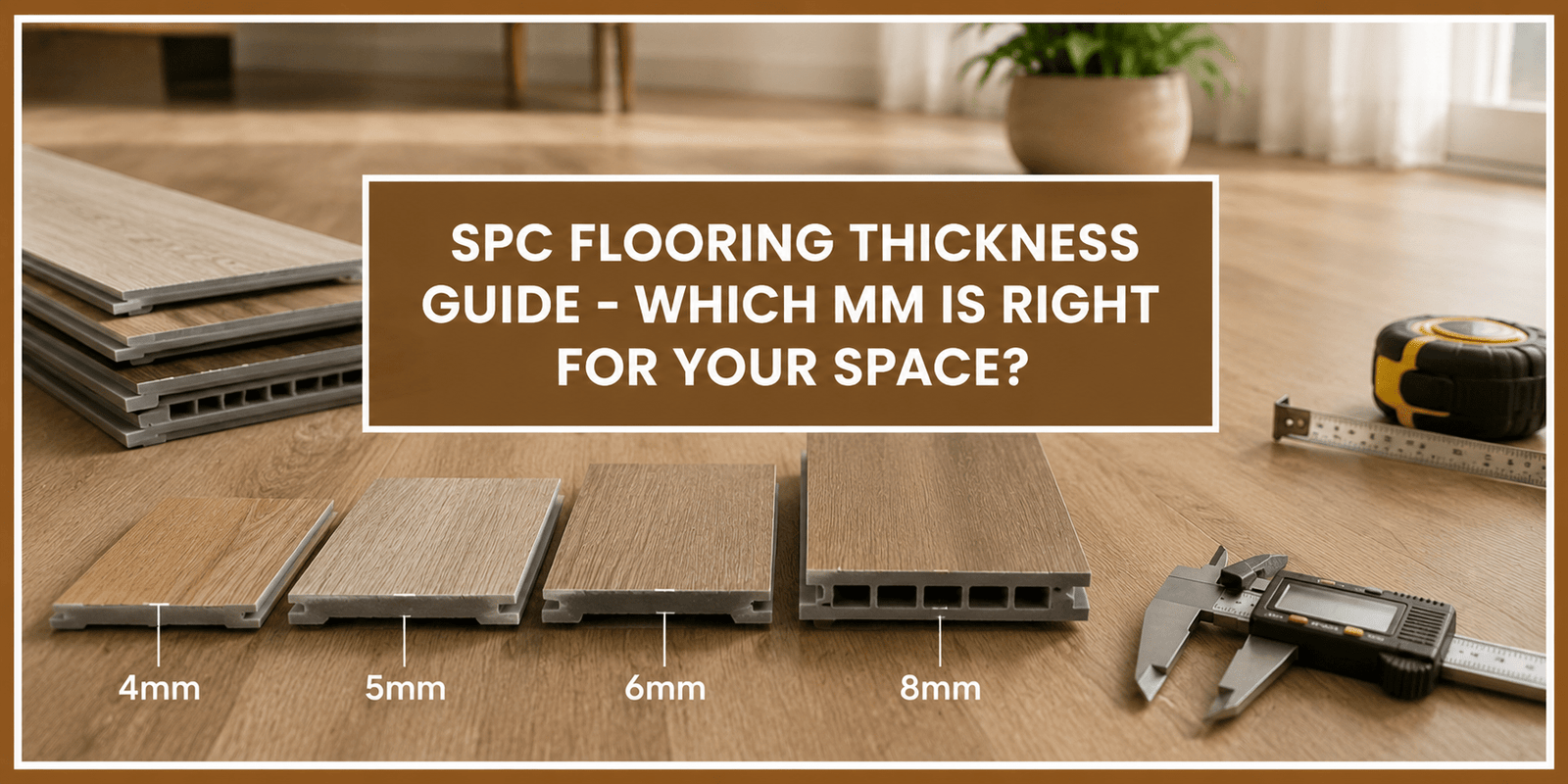
If you’ve started shopping for SPC flooring, you’ve probably noticed it comes in a range of thicknesses 4mm, 5mm, 6mm, and sometimes up to 8mm. It’s easy to assume “thicker is always better,” but that’s not quite true. The right SPC flooring thickness depends on your space, your subfloor, and how the room gets used.
In this guide, we’ll walk you through what SPC flooring thickness actually means, how common options compare, and how to pick the right SPC flooring in Dubai for your space.
What Does SPC Flooring Thickness Actually Mean?
SPC flooring thickness refers to the total thickness of a plank, measured from top to bottom. It includes a few different layers stacked together:
- Wear layer – the clear top coating that protects against scratches and stains
- Design layer – the printed pattern that gives you the wood or stone look
- SPC core – the rigid stone-plastic layer that gives the plank its strength and stability
- Backing layer – often foam or cork, added for cushioning and sound absorption
When you see a plank labeled “5mm,” that’s the sum of all these layers, not just the core. It’s worth knowing this because two planks with the same total thickness can still perform differently depending on how much of that thickness is core versus wear layer.
Common SPC Flooring Thickness Options
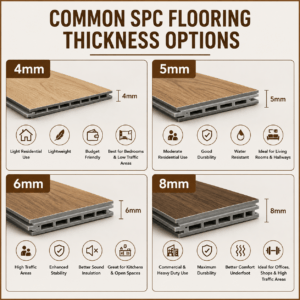
Here’s a quick breakdown of the thicknesses you’ll typically come across and what they’re generally suited for:
| Thickness | Core Feel | Best Suited For | Subfloor Tolerance |
| 4mm | Firm, closer to the ground | Budget renovations, low-traffic rooms | Needs a near-perfect, level subfloor |
| 5mm | Balanced strength and comfort | Most homes — bedrooms, living rooms, kitchens | Handles minor unevenness |
| 6mm | Sturdier, quieter underfoot | Busy households, apartments, light commercial spaces | Forgives moderate subfloor imperfections |
| 8mm | Maximum stability and cushioning | Heavy-traffic commercial areas, uneven old floors | Covers larger subfloor flaws |
As a general rule, the thicker the plank, the more it can hide small bumps or dips in your existing floor, and the quieter it feels when you walk on it.
SPC Flooring Thickness vs Wear Layer Thickness
This is where a lot of people get confused, so let’s clear it up. Total plank thickness and wear layer thickness are two different things, and they affect different aspects of your floor.
| Factor | What It Affects | Typical Range |
| Total Plank Thickness | Stability, comfort underfoot, sound insulation | 4mm – 8mm |
| Wear Layer Thickness | Scratch and stain resistance, day-to-day durability | 0.2mm – 0.5mm |
You could have a thick 6mm plank with a thin wear layer that scratches easily, or a slimmer 4mm plank with a strong wear layer that resists marks well. When you’re comparing products, it’s worth asking about both numbers, not just the total thickness. To learn more about how durability and features impact performance, read our guide on SPC flooring pros and cons.”
How to Choose the Right Thickness for Your Space
When choosing the right thickness for your space, you can explore the full range of flooring solutions at Floor Mart to compare different styles and options.
1. How Much Foot Traffic the Room Gets
For a guest bedroom or a rarely used space, 4mm is often enough. For living rooms, hallways, and kitchens where your family walks through constantly, we’d usually recommend 5mm or 6mm.
2. The Condition of Your Subfloor
If your existing floor is smooth and level, thinner planks will sit and perform just fine. If it has dips, old tile lines, or minor imperfections, going thicker helps the flooring bridge those gaps without extra prep work.
3. Noise and Sound Insulation
If you live in an apartment or a multi-story home, thicker planks (5mm–6mm) with a foam or cork backing reduce footstep noise between floors, something your downstairs neighbors will appreciate too.
4. Comfort Underfoot
Because SPC has a rigid core, thinner planks can feel harder to stand on for long periods. If comfort matters to you, especially in kitchens where you spend a lot of time on your feet, a thicker plank with more backing makes a noticeable difference.
5. Budget
Thicker planks generally cost more. If you’re working with a tight budget and your subfloor is already in good shape, 4mm or 5mm gives you solid performance without paying for thickness you don’t need.
SPC Flooring Thickness for Dubai Homes
For homes , we generally recommend 5mm to 6mm SPC flooring dubai. It handles the heat and humidity just as well as thinner options, but it also gives you better sound insulation in apartments and a more comfortable feel in villas with large open living areas. If your subfloor has old tiles or slight unevenness, which is common in older properties, the extra thickness saves you from costly leveling work before installation.
Does Thickness Affect Cost?
Yes, generally the thicker the plank, the higher the price per square meter. But it’s worth thinking of it as a long-term investment rather than just an upfront cost. A slightly thicker plank often means less wear and tear over time, fewer repairs, and a longer lifespan, which can work out cheaper in the long run, especially for high-traffic areas.
Final Verdict — Which Thickness Should You Choose?
If you had to pick one thickness that works for most homes, 5mm is usually the sweet spot. It balances comfort, durability, and cost well for everyday residential use. Go with 4mm if you’re on a tight budget and your subfloor is already level. Choose 6mm or 8mm if you want extra sound insulation, have an uneven subfloor, or you’re flooring a busier commercial space.
Whatever you decide, it’s always worth checking both the total thickness and the wear layer before you buy, since they work together to determine how your floor performs over the years.
Frequently Asked Questions
What is the best SPC flooring thickness for homes?
For most homes, 5mm strikes the best balance between comfort, durability, and price. Thinner 4mm options work well for low-traffic rooms with level subfloors.
Does a thicker SPC plank mean better quality?
Not always. Thickness affects stability and comfort, but the wear layer thickness is what really determines scratch and stain resistance. A quality 4mm plank with a strong wear layer can outperform a poorly made 6mm one.
Is 4mm SPC flooring good enough?
Yes, for low-traffic areas with a smooth, level subfloor, 4mm SPC flooring performs well and is a budget-friendly choice.
Does SPC flooring thickness affect installation?
Thicker planks are generally more forgiving of minor subfloor imperfections, which can reduce the amount of floor preparation needed before installation.